Orc Porn
or, Violence & Vulvas

I spent the weekend at Mythic Con in Asheville, but I think I’ll wait and bundle that with a Ret-Con report sometime in March.
In the meantime, check out this very interesting post on the anthropology of marriage. I gleaned multiple story ideas from it. Ghost marriages? Wow.

Following up on November’s redheads-in-fantasy post, I’ve been listening to some literary / cultural criticism from Substacker Hilary Layne, via her accompanying YouTube Channel.
Ms. Layne has no shortage of opinions, and she expresses them confidently, with both force and articulation. Also with much snarky quick-cut eye-rolling; imagine if Gillian Anderson’s FBI agent Dana Scully from The X-Files was a Catholic mean-girl influencer.1
This particular video is about sexually explicit writing, which she never calls pornography since she believes the YouTube algorithm will pick up on the keyword in the transcript but not on her mouthing the word silently. It might even be true, at this point in time. But that’s the problem with bright lines and definitions. Some people want them to stay put so that they can be safely inside the rules all the time. Other people love to push those boundaries, regardless of where the current consensus places them. People shift their preferences based on time (including time of life, with younger people being more rebellious), place (Vegas, Amsterdam, Spring Break), and whether they think anyone is watching them.
My bigger problem is with her strict statistical dichotomy between male and female desires. On most measures, the difference within groups is much larger than the difference between groups.
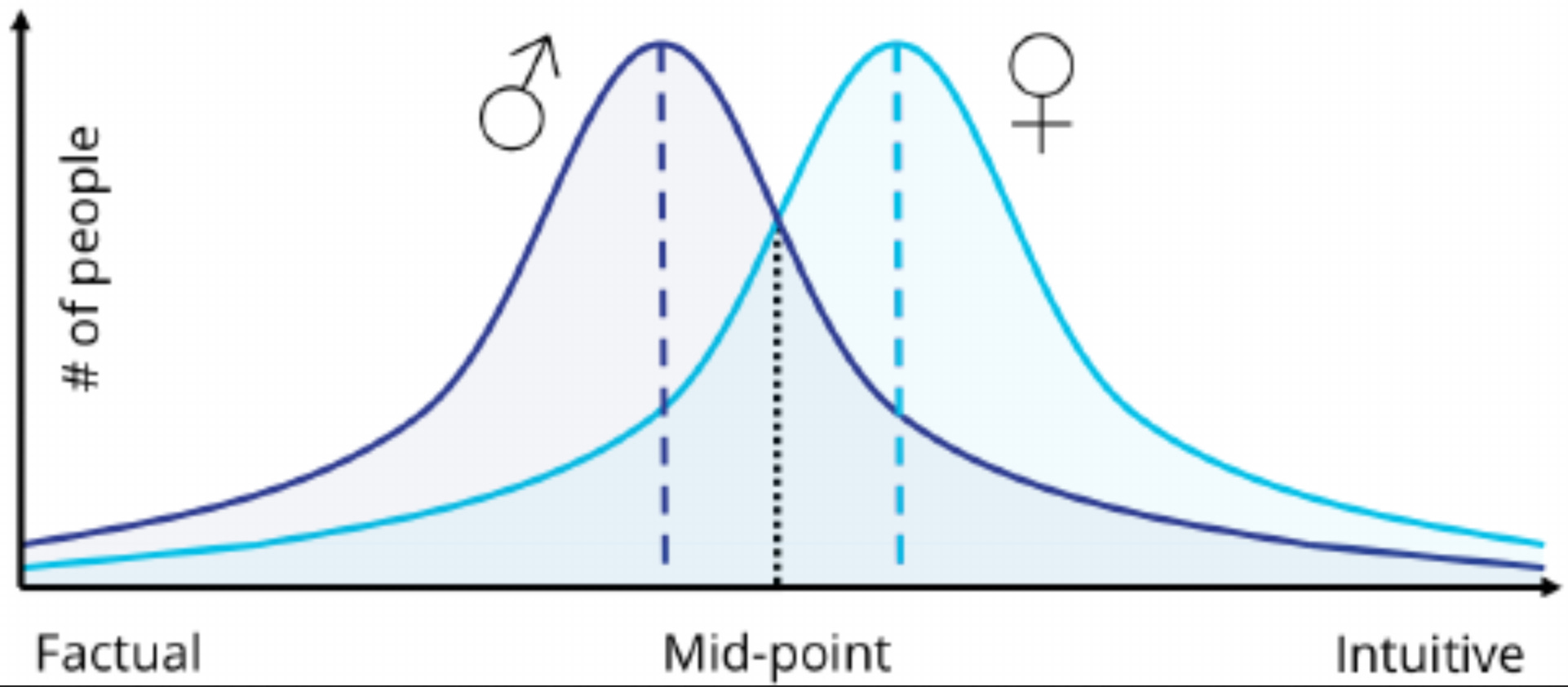
Physical aggression being an obvious counter-example.
And while the precise magnitude of this difference does vary across cultures (Nivette et al. 2019), it grows larger the more lethal the aggression, such that men comprise 95% of those convicted for homicide worldwide (United Nations Office on Drugs and Crime 2013).
So which difference is more important?
All that said, in what I will share today below the fold I happen to agree with her. At the local B&N, in the gaming section, I ran across Tusk Love, set in the Critical Role universe. This is not Hasbro fare.
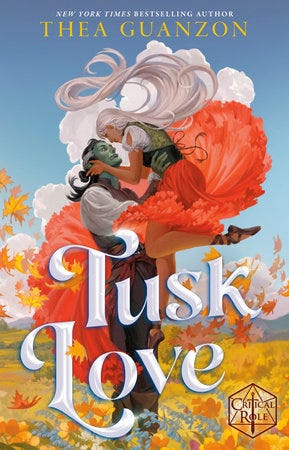
But in the tradition of the tease, which is fair and completely genre-appropriate in this case, first I will talk about a very different book.
Making Enemies
I have previously mentioned here Keith Amman’s blog The Monsters Know What They’re Doing, which he has now turned into four — no, five! — best-selling books, plus a half-dozen playable modules.2 I have at least skimmed through the majority of those thick-ass books, and in general I really appreciate his ecology-based approach.
According to Mr. Amman, except for:
the undead and other programmed constructs, which are magically bound to their maker’s will; and
a special category of things called Aberrations (which by definition have motives that we cannot even begin to understand),
all living creatures have some level of survival instincts. They are adapted to their environments, and they don’t do stupid things, like conveniently stand in one place out in the open until they are completely surrounded by humans wielding pointy or slashy metal weapons.
Humanoids with JMH
The main difference with this book is that it’s not all Amman. He includes interviews with other gaming professionals, such as James Mendez Hodes, known for a two-part essay about Orcs, Britons, and the Martial Race Myth. One of the protagonists of Tusk Love is half orc. I think Tolkien probably got the name from William Blake, but he imagined his villain’s henchmen as corrupted elves, twisted into something like a cross between a talking ape and a Mongol (minus the pretty horses, which he saved for the Rohirrim).
They have a whole conversation about humanoid monsters, which some people keep trying to rehabilitate and complexify, and others want to keep for their original purpose, which is to provide anonymous stand-ups for the hero to knock down.
I, as the Internet’s orc police, don’t actually have the neat ability — or desire — to go into a bunch of white dudes’ basements and tell them to stop doing orcs the way they’ve been doing orcs for the past twenty years, every single Wednesday night of their lives, right? Of all the hills I could possibly pick to die on, that is not a great use of my time and energy.
I’ve written before about how the 70s cartoons of my youth tried hard to be both exciting and completely nonviolent, and failed at both goals.
We can’t just fight inanimate things. We’ve got to fight skeletons that look kind of human. We’ve got to fight orcs, which look kind of human. The robot could look like anything, but we made a robot that looks kind of human, because because [it’s] an expression of that, that thing that our brains are doing all the time.
In my opinion, that’s a big part of the fashion for zombies. They’re gross, so they reliably trigger a disgust response; they’re rotted enough so that they don’t look like any specific ethnic group; and they’re already dead, so it’s morally OK to chop them into pieces with a sword (or an axe, or a lawnmower). In a society that worshiped its ancestors more, that might not be the case.
Later in the interview I take exception to some of their deliberations.
Plant-eaters may be scientifically interesting, but they don’t make good monsters — they lack the element of danger. If we’re going to borrow, we should borrow from something mean.
Sorry, but that’s just incorrect. Bison injure / kill more people than anything in Yellowstone except cars and hot springs, and hippos are the most dangerous animal in Africa (and maybe Columbia, and that alternate-history Louisiana). Wild boars are actually acknowledged in modern fantasy fictions as more dangerous than bears most of the time, and this is confirmed by wildlife professionals.
“Tigers, Indian elephants, Nile crocodiles, and venomous snakes kill more people than wild pigs, but wild pigs are certainly worse than bears, wolves, and all shark species put together,” says Mayer, technical program manager at the Savannah River National Laboratory in Aiken, S.C. “Wild pigs are nowhere near the worst of the worst, but they’re far more dangerous than people believe.”
Genetics with MM
Because of my ongoing obsession with speculative biology, I really appreciated his conversation with Mike Mchargue of Quantum Spin Studios in Los Angeles. They got to talking about genetic fidelity and lifespan in fantasy creatures, around the last of its kind trope,
It’s extremely powerful. It might live for hundreds or thousands of years. But when it’s dead its kind are gone. In a world with magic, that would be a relatively common outcome of evolution, being oversuited to a niche.
and they almost invented something that I’ve been thinking about for a while: magic cancer, by which I mean a cancer that is magical, or depends on magic to continue growing. We already have terrifying examples of contagious cancer, in dogs and Tasmanian devils, and I’ve always liked the idea of zones where magic works better or worse from Larry Niven’s classic The Magic Goes Away. Level modifiers (plus or minus) are an easy way to do that. What if moving into a higher-magic zone activates your magic disease?
They mention an old book that I haven’t read, and the kind of academic ‘monster theory’ that underlies Emily Zarka’s PBS web show Monstrum.
We want to believe we’re special and that the universe exists just for us, and these scientists refuse to humor us! The nerve!
He also talks about zombies as the new Other, basically the only one still available to those, like Hodes above, who can’t stand to other any human analogue. In a different online essay, Monsters and the Moral Imagination, Stephen Asma gets right to the point:
Two sides calling each other monsters doesn’t prove that monsters don’t exist. In the case of the American torturer at Abu Ghraib and the Taliban beheader in Afghanistan, both epithets sound entirely accurate.
My own view is that the concept of monster cannot be erased from our language and thinking. It cannot be replaced by other more polite terms and concepts … even if we neuter the term from obscure theological questions about Cain, or metaphysical questions about demons, the language still successfully expresses a radical frustration over the inhumanity of some enemy.
Actions make monsters.
In the same hypocrisy that I mock below, the violence is above the paywall and the sex is below.
Keep reading with a 7-day free trial
Subscribe to Doctor Eclectic to keep reading this post and get 7 days of free access to the full post archives.