Morons & Magnets
the difficulties of scientific communication

Before we get started on silly summer fun today, something that actually matters.
The link alone tells you much of what you need to know.
I won’t quote from it here, but I think it should be obvious that the whole point of peer review of scientists by scientists is that short-term political appointees have the wrong incentive structure to drive long-term projects like basic scientific research. I don’t believe that the root problem is expertise, that politicians are not intellectually qualified to judge technical issues; it’s our job as scientists to explain ourselves and our work (which most of us are not good at). Compare these two.

Talking to non-specialists is a talent but also a developable skill set, and of the two people in this video York is clearly better at it. That’s not a knock; that’s just knowing your strengths. I am better at science communication and teaching than I ever was at research, in part because I like them more.
I do not spend much time advocating for or against specific policies, but this is the kind of idiocy that starves people to death1.
Russia had a particular need for agricultural science, but during Lysenko’s long stranglehold on the discipline Soviet agricultural science did not just stagnate. It went backwards. Although Russia is huge, it is not a fertile country, and it has very cold winters. Its peasants were subsistence farmers and had no surplus to give to the urban population. Famine has been a constant threat throughout Russia’s history, which accounts for Russia’s notorious food shortages and its historic dependence on Ukrainian agriculture. This dependence is one reason why Ukraine independence has been such a threat to Russian rulers. So Lysenko’s claim to have solved the problem of improving grain production on the basis of socialist principles was music to Bolshevik ears. So too was his rejection of natural selection based on survival of the fittest, which to Lysenko was a bourgeois notion that reflected the competitive principle in capitalism.
That fucker killed tens of millions of people with his stubborn stupidity.
The comment period for this new OMB rule is open for 36 more days, it says. I will also post my comments here, once I finish them. I would encourage every reader of this newsletter to do the same.
Not to Undermine My Own Rage-Baiting
Neither do I pay much attention to game-o-sphere chatter on the internet, but this twenty-minute rant caught my attention (for about ten minutes).
Enshittification as a term does not appear until 15 minutes in, after the third commercial, which says something about the host / creator’s own monetization strategy. The basic argument is for players / community members to organize a boycott and force the Has-bros to back down, as happened when they tried to tear up the Open Gaming License, the Creative Commons-inspired business model that allowed the company to brand-farm content without paying for it.
Sure, lady, send me a link to your petition. I agree with you that a pay-to-play subscription model is bad for the hobby. Rentiers are bad. Union-busters are worse.
The thing is, I agree, but I am not the target demographic. I think the last time I paid a corporation for D&D content was the 2nd edition Players’ Handbook, sometime in 1989 or possibly as late as 1990.
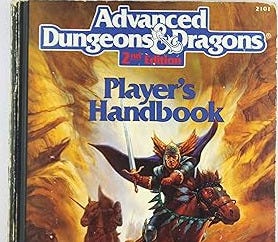
Even before the CCL-enabled indie game movement, with its digital marketplaces like DriveThruRPG, there was a robust secondary market for game materials, just as there was for used video games2. I have never cared about fashion. I am an early adopter of free ideas, but I tend to be more conservative with my always-limited ca$h. I still own a flip phone3.
The Discourser in the video above is convinced that paywalls work, that locking customers in with a subscription effectively prevents them from trying other games. I would love to see some more actual research on this question, by disinterested parties. The one paper that I’ve found so far relies on the experience of a single company. My personal experience here on Substack (n=1) is relevant but not sufficient to draw conclusions, and I obviously don’t expect Substack to release any across-the-platform studies that might undermine their own business model. I’m sure they’re doing those studies internally; I just don’t expect the company to release them to users. If you’ve seen anything more than sales-based anecdotes about this issue, please
Dark Towers
No, not the electronic board game, or the rebooted electronic board game, or the Stephen King series, but the Judges Guild module from 1980.
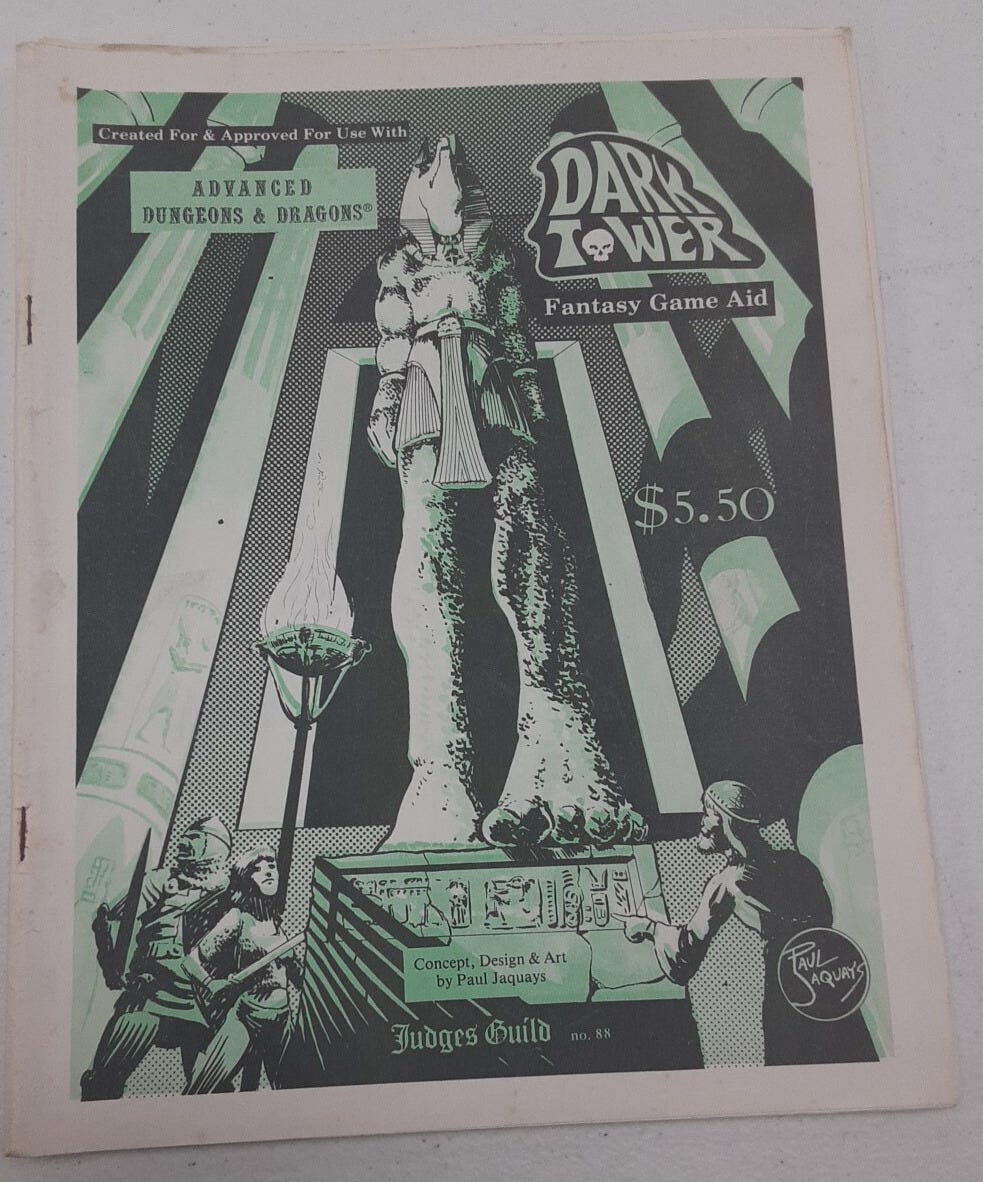
As above, I did not get into RPGs until the late 80s, with 2nd edition, as a young adult, so I don’t have the same level of Stranger Things tween nostalgia that drives some of the graybeards in my gaming circles. As I have mentioned in other issues of this newsletter . . .

However, a member of my secondary group has stepped up to run this particular fantasy game aid, and Wikipedia sez:
In his 2023 book Monsters, Aliens, and Holes in the Ground, RPG historian Stu Horvath called this, "a massive, 72-page masterpiece of the early [RPG] era and [Jaquay's] first design for Judges Guild as a full-time employee." Horvath went on to describe it as "a romp. Clever, compelling, and silly, it never lets players take it too seriously, but it also never ceases to be dangerous."
So I’m willing to give it at least one Saturday afternoon / evening, just to see.
Horvath’s book is great, by the way, one of many on the tabletop hobby by MIT Press. He also hosts an online community / print magazine called Unwinnable, which seems to cover many topics that I might care something about.
I say “secondary group,” because I joined it much later, though it has actually been considerably more adventurous, in the sense of rotating GMs and systems:
an Old-School Essentials version of The Halls of Arden Vul, based on the model of 3d6 Down the Line (the longest one so far);
Obsidian Portal campaign page here
the original source of my solo efforts with Cap Doffer’s crew

two Shadowdark mini-campaigns, one Viking-themed and one jungle-themed, starring some of the same PCs;
my Thundarr the Barbarian game, using TSR Marvel Super Heroes;
and one guy keeps threatening Dolmenwood over the Discord channel.
ReCon 2026
I only went to this for the last day — Monday, Memorial Day — and for much of the morning I was down in the Play to Win basement. I’m not one of those 14-year-olds who wants to run through every game on the table so they can get their names into as many drawings as possible. Left to my own preferences, I’ll do the same Play to Win multiple times, if I’m having fun. The only one of these I even remember by name is Chicken Cha Cha Cha (and I had to look that up using the phrase “chicken racing memory game”). There was a Grand Prix car racing game, which I don’t think was either of the top two search results, Grand Prix or La Corsa. About all I remember is that each team started with two cars. There was some slipstream mechanic that we never quite figured out, and an initiative mechanic that I may borrow for Marvel:
each car (or character) had a card, and the turn order for the round was just whenever your card came up in the shuffled initiative deck. The idea was that a car might make its move at any time, whenever the opportunity to pass arose.
Marvel characters have the potential for multiple attacks, so there could still be a die roll involved, but that would just place multiple copies of your card into the initiative deck.
I like this idea because it makes things a bit more chaotic narratively, without increasing the procedural complexity much.
Closer to noon, upstairs, I jumped in on the first round of Ethnos, a card drafting game where playing sets of cards (for instance, Red Giant, Green Giant, Blue Giant) would allow you to place tokens to grow your army in one territory on the map. Skeletons were wild. Any time you played a set, you had to release the rest of your hand to the Market.
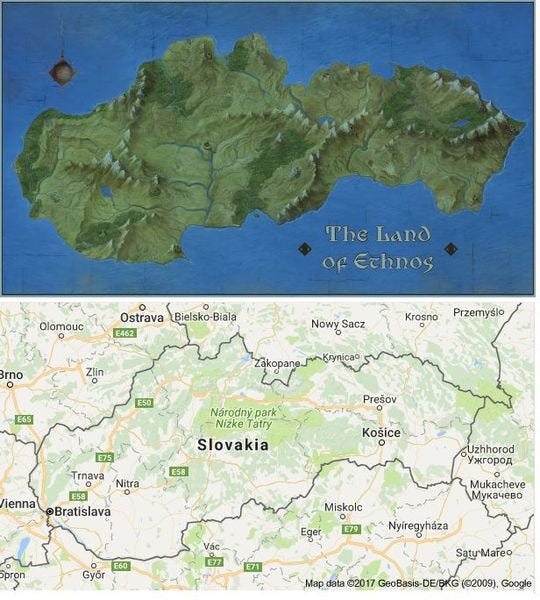
Larger sets were also worth victory points directly, as were certain events like Most Giants in a single round. Point values escalated over time, so an early lead was not a guarantee of victory. I enjoyed this game and would play it again.
Last year I won multiple lots in the raffle, but this year nothing. I did buy a game from the Flea Market room called Evolution, which I’ve been interested in since the VSI podcast days, when biologist Dmitry Knorre released the first version in Russian. I e-mailed him at that time about doing an interview but it never happened. My plan is to take Evolution to work along with Cytosis: a Cell Biology Game, which I also bought used at another con. I have to fill three office hours a week, and that would be more educationally productive (and potentially more fun) than spending that whole time answering e-mails.
The only thing I contributed to door prizes this year was a Paladin set that I got for participating in a Dice Throne tournament during LexiCon a few weeks ago. That’s what I go to cons for: to try new things.
Wizards of the Boast
Pyrite the Magician is trying something new in this week’s installment of “Don’t Feed the Trolls.” For more off-brand humor, check out the first three installments.
And for those subscribers afraid to peer over the paywall, here’s a little lore about the dumb jokes you’re missing out on.
Note that the gorgon is “legacy” content, which might expire from future editions unless you’ve paid for it. I would ask how that works, but as above, I don’t care.
I will also note that parodies are specifically protected by the first amendment.
For now.
