Cognitive Ecology
and the valley of death

First, in the piratical spirit of this piece from a few weeks ago,

There’s a crowdfunding campaign to buy the bankrupt Spirit Airlines.
At 3:00 AM on May 2nd, 2026, Spirit Airlines turned off the lights. The planes stopped. The gates went dark. The airline that carried 44 million Americans last year simply ceased to exist.
Private equity is already circling the wreckage. But before they lock it up — there is a narrow window for something that has never happened in commercial aviation. The passengers, the workers, and the communities Spirit served can take it back. Like the Green Bay Packers. Like WinCo Foods. Like us.
Now, I don’t even know if this is legal1, but in a city whose current leaders are betting its future on aerospace manufacturing (as we’ll see below), this is really interesting. Let me know how much I should follow up.
Two Short ‘Nonfiction’ Pieces
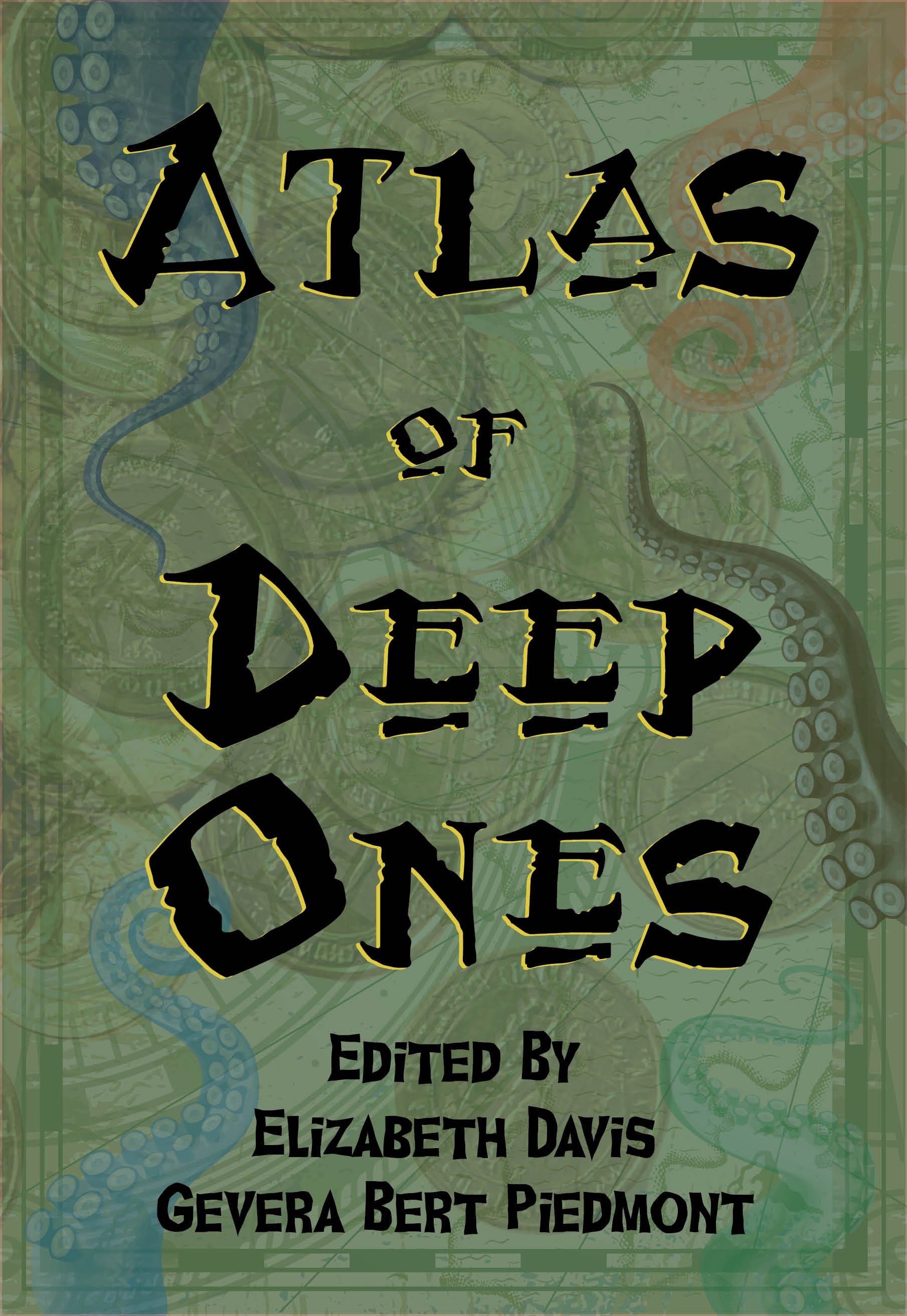
Deep Ones are fan favorites from Lovecraft, semi-demonic fish-man-frog(?) hybrids who can walk on land and may have inspired legends of merfolk (or as GRR Martin calls them, merlings). They were originally supposed to be scary and disgusting, but memes mutate, and in an environment where nerds rarely but regularly reproduce, it was inevitable that there would be cutesy children’s versions.
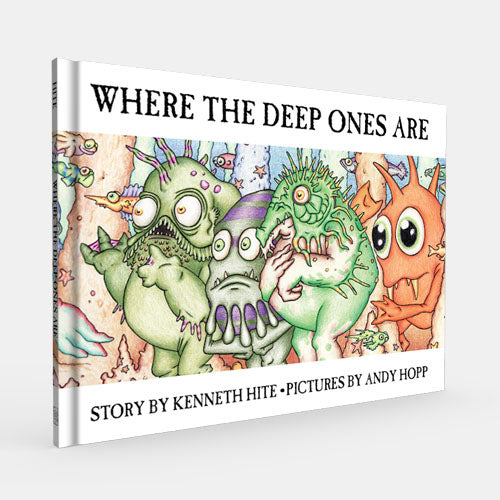
I have two faux articles in this new anthology. The book that inspired the first one, The Devil’s Teeth, is straight-up science reporting.
Since Jaws scared a nation of moviegoers out of the water three decades ago, great white sharks have attained a mythic status as the most frightening and mysterious monsters to still live among us. Each fall, just twenty-seven miles off the San Francisco coast, in the waters surrounding a desolate rocky island chain, the world’s largest congregation of these fearsome predators gathers to feed.
My much shorter version is set in the deeper waters just west of the Farallon Islands, where human dumping has begun to affect the environment.
The USS Independent, a derelict World War Two aircraft carrier used as a target during the atomic bomb tests that destroyed Bikini atoll, was also scuttled nearby. The irradiated Independent currently sits upright, with at least one plane still in the hangar, at a depth of about 1000 meters. Hydrophone recordings indicate Deep Ones activity in the form of metallic banging sounds from the wreck. These sounds may indicate foraging, industrial activity, or even music.
I stuck fairly close to actual events and plausible science with this one (aside from the whole fish-frog-man thing), and even more so with the other, “Black Smokers,” about hydrothermal vents. Plate Tectonics was not even proposed when Lovecraft was writing in the 1920s and 30s, but he was all about the Cambrian Explosion, metaphorical versions of quantum mechanics, and other weird science of the day.
Arda Rediscovered
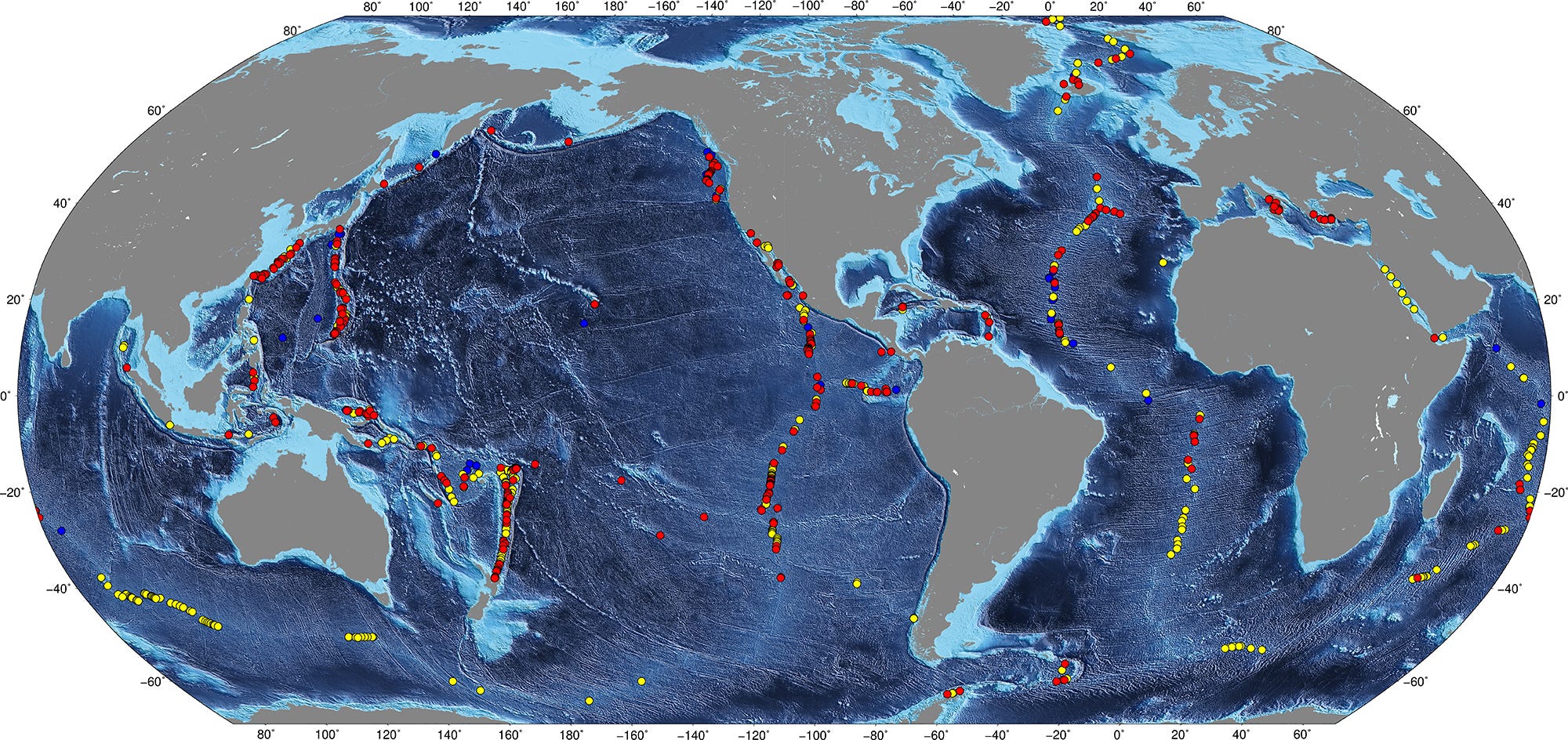
Coincidentally, my favorite Tolkien Substack just released some speculations about the Watcher in the Water, that most mysterious thing from the depths of the earth.
The ecosystems that develop around hydrothermal vents, deep beneath the ocean floor, support life that looks nothing like surface fauna, including tube worms, eyeless shrimp, organisms running on chemosynthesis instead of photosynthesis, and bioluminescence sustained in perpetual darkness, all of it shaped by conditions no surface-dweller ever experiences.
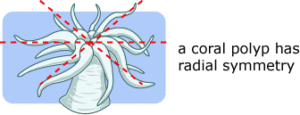
One natural hypothesis they don’t consider is a giant version of the freshwater hydra, a tiny and radially symmetric creature like the marine starfish and anemones that Lovecraft modeled so many of his own monsters on.
The thought of Tolkien being in conversation with Lovecraft (intentionally or not) is something that I had never considered before.
The pattern across every stage of composition is consistent: Tolkien systematically removed every line that explained the creature’s nature or purpose, and whatever the Watcher was in Tolkien’s imagination, he wanted it less defined in the reader’s.
That could be independent invention, or it could be horizontal transmission. The Arda authors want to draw the memetic line of descent back to European literature like Beowulf rather than the modern science that inspired Lovecraft. At the very least the two authors were using the same narrative bag of tricks, “guided by one purpose,” as Gandalf put it.
But I Digress
Either of my Deep Ones bits could easily be expanded / adapted into an adventure / game module. My friend Bowser has a history with Chaosium, which publishes a lot of Cthulhu stuff, but after my Wayward workshop experience I’ve been looking for an excuse to try self-publishing. With nothing official on my plate for the first time in a while, I’m hoping to do some more non-Substack writing this summer.
More immediately, I have a reading planned for the end of this month at The Second Hand Book. Details to follow.
“Used bookstores are just cooler,” said Julie Wade, the owner of The Second Hand Book, which opened last month. “You can find, I don’t know, bizarre things.”

It might be one of these Deep Ones pieces; or I might read that paywalled piece from last week instead. Or even the one about Sketchy the Clown, which was read live in Braintree, England last fall. Put two divergent thinkers like me and Julie in a small book-filled room, and decisions can be hard to come by.
Startup Week
Kind of exhausted from Merlefest, I missed the first day of this completely, and I was a little late on Tuesday. which was devoted to local entrepreneurs. The first panel was devoted to a cookie-mix lady whose name I don’t remember and Mark Bowles, who runs Gate City Guide, a very simple events list on Beehiiv. Maybe subscribers get more back-end processing, with sorting and targeting and all that. Or maybe there are just 12,000 people who want a simple list.
I can’t even tell how to submit an event. Like my reading, for instance. There’s a Partner page asking about yearly marketing budgets, so maybe it’s pay-to-play?
Because of his background as an athlete, I had unfairly assumed that Joey Cheek was just the Chamber’s Faceman (or worse, Flash Gordon — see below). As the day went on I became more and more impressed. I’ve never once prepared for a con panel; I just show up with my life experience as a scientist (I’m not famous enough to get invited as an author) and answer questions based on that experience, or on whatever I’ve been reading or watching recently. I have occasionally done a cursory look-up of other panelists just so I don’t accidentally say something offensive2.
But JC had gone so far as to call up inventors at NC State, who were not even on the panel, two weeks ahead of time in order to ask questions about a technology that they had licensed to a company that was on the panel. He had clearly pre-interviewed each of the panelists as well, to pull out of them specific stories that he then wanted them to re-tell on stage. Not quite Terry Gross from Fresh Air, who is famous for deep-cut questions, but not the shallow softball stuff that I expected to sit through as a price for the networking. My only real complaint is that there were no biotech companies there. Not a one. Maybe next year.
The transportation stuff was fascinating, though.
Sasko Cuklev of Volvo Autonomous Division
Volvo is a Swedish company known for the high safety ratings of their cars (they invented the seat belt), and that was the emphasis of the presentation. Volvo is not “bolting on” control modules and actuators in existing trucks, in order to save labor costs. They have redesigned robot trucks with redundant safeties in each system where a driver would traditionally have been the redundant safety — the human brain being a pretty good all-purpose computer. According to Cuklev, in the tests they are currently running on Texas highways, their trucks see and react to a human walking along the interstate at night (which is not supposed to happen, by law) eleven full seconds before the human riding shotgun. Multiple agencies track truck accidents because they are commerce, but also because they impinge upon other drivers. There are nearly 5,000 deaths per year, and they’ve been trending upwards.
Of course the knee-jerk reaction for a kid who grew up watching BJ and the Bear is job loss for truckers, but according to Cuklev their goal is to replace the long-haul jobs that are going unfilled, because driving all night and sleeping in your truck sucks. And from my short conversations with another entrepreneur at the event, the real bottleneck for truckers is the pay per trip, where the companies have a huge information asymmetry that they use to drive down prices. I hope to follow up with him for a Q&A once he launches his app later this summer.
Aviation
Michel Merluzeau of JetZero explained how the “flying wing” models that the Nazis were experimenting with during WW2, where the entire flattened body of the plane is a lifting airfoil, instead of the “tubes with wings” that have been in use commercially for the past 70 years, can cut fuel use by 50% or more3. JetZero sees a limited window of opportunity to “challenge the duopoly” of Airbus and Boeing before the Chinese do. Where those companies are plagued by delays and backlogs, he promised that because of their advanced supply chain management and their new and improved automated factory right here in Greensboro, JetZero would be able to guarantee a delivery date . . . starting sometime around 2030.
Doug Dremel from HondaJet wanted us to know that Honda loves smaller suppliers owned by women and minorities, and that there’s a shortage of machine shops that can make parts to air travel’s exacting specifications. As opposed to On Time Delivery, which runs everything lean to cut inventory and storage costs, Honda’s predictive models prioritize keeping the line running, so they’re trying to buy local whenever possible. Blah blah blah. These are all problems that biology solved a billion years ago.
However, I was kind of wrong when I said there were no biotech companies there. Dremel’s wife runs a medical device company, focused on the plastic surgery industry, and Dremel himself has a side hustle in the cannabis industry. I hope to follow up with him this summer as well.
After three days of this stuff I was too tired to attend Capital Connects at the recently reopened Pyrle Theater this year, but here’s a link to 2023’s event, which I did attend.

subtitle: in the Chamber of Commerce!
Honestly, the thing that annoys me most about this show is Flash himself. He’s a jock. Worse, he’s a booster, so relentlessly positive about every damned thing that he won’t even hear reasonable concerns about his latest insane plan. “We have no choice!” is not the best response to all criticism, and “Have you got a better idea?” is not supposed to be a rhetorical question.
See y’all next week.
I’m sure the private equity vultures don’t want it to be, and the proposed model (which I like, so far), based on the Green Bay Packers football team, may not be applicable in a highly regulated industry like airlines. But hell, we already allow absentee shareholders, don’t we? This seems better.
Purposely saying something offensive at a science fiction con is just fine, as long as it gets a laugh from the audience.
Yeah, but they also eagerly expect flight miles to go up by 5x or more as poor people in Asia reach the middle class, so 50% isn’t really helping on the carbon front.